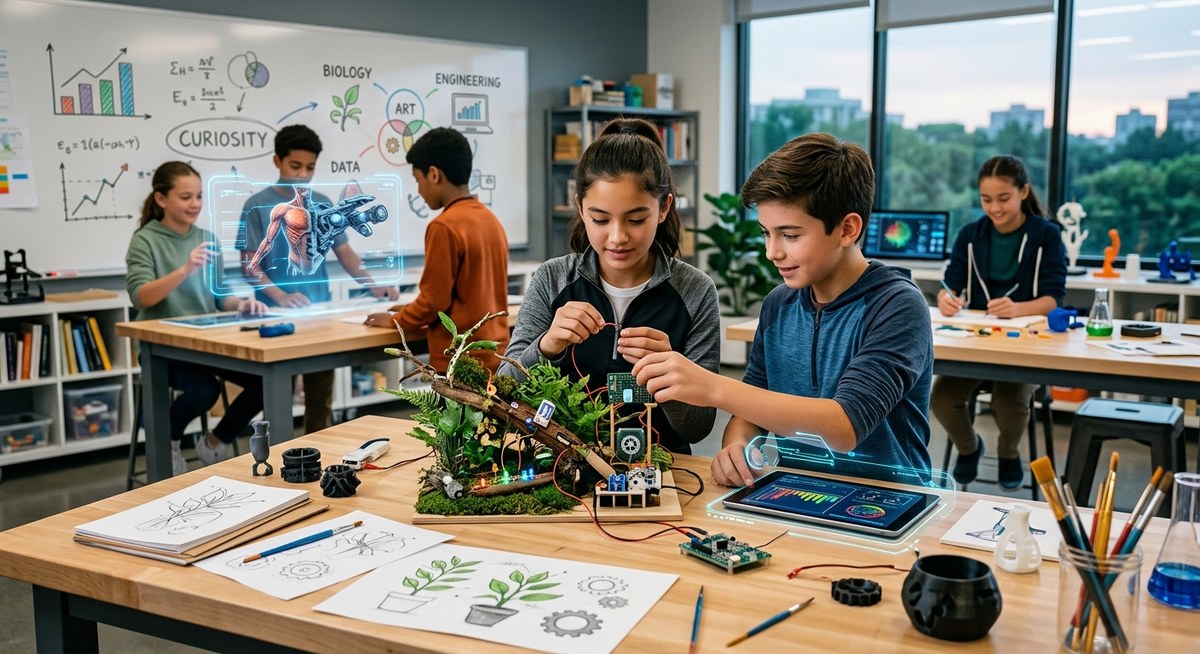
Starting in 2026, educators are discovering new ways to make learning more engaging by designing projects that blend different disciplines. These projects spark student curiosity and foster a love for discovery. Instead of traditional lessons that focus on memorization, students get involved in hands-on experiences that connect art, science, history, and technology. This approach creates a vibrant learning environment where students see the real-world relevance of what they learn, encouraging them to ask questions and think deeply.
Creating interdisciplinary projects that connect multiple subjects enhances student curiosity in 2026. These projects promote exploration, critical thinking, and real-world application, making learning both meaningful and exciting.
Understanding the Power of Interdisciplinary Projects
Interdisciplinary project design for student curiosity 2026 revolves around integrating different subjects around a common theme or challenge. This approach mirrors how real life works, where science, art, math, and social studies often intersect. When students see connections across disciplines, they develop a deeper understanding and a stronger desire to explore.
By blending art with science or history with technology, you provide students with multiple entry points to learning. This variety keeps their engagement high and nurtures their natural curiosity. For teachers, it opens the door to creative lesson planning that taps into students’ interests and experiences.
Practical Steps to Design Engaging Interdisciplinary Projects
Creating such projects may seem complex, but following a clear process can make it manageable and rewarding.
1. Identify a compelling central theme or question
Start by choosing a topic that naturally combines multiple disciplines. For instance, studying climate change can include science (environmental impacts), social studies (policy and ethics), and art (visual storytelling). Focus on questions that evoke curiosity, like “How can art influence public perception of scientific issues?” or “What role do cultural practices play in environmental sustainability?”
2. Map out relevant subjects and skills
Next, identify the key concepts, skills, and standards from each discipline that relate to the theme. This ensures the project aligns with curriculum goals while remaining meaningful. For example, a project on renewable energy could include physics principles, engineering design, economic analysis, and persuasive communication.
3. Design activities that encourage exploration and collaboration
Create hands-on tasks that require students to apply knowledge from different areas. Encourage collaboration by assigning diverse roles that leverage each student’s strengths. For example, in a project on local history, students might research, create visual exhibits, and develop digital presentations, combining research skills, artistic expression, and technology use.
4. Incorporate reflection and iteration
Build in opportunities for students to reflect on their learning process and outcomes. Encourage them to revise their work based on feedback. Reflection deepens understanding and sparks further questions, fueling ongoing curiosity.
5. Connect with real-world issues and experts
Link projects to community challenges or invite professionals to share insights. This real-world connection makes learning relevant and motivates students to dive deeper.
Techniques to Foster Curiosity and Common Pitfalls to Avoid
Using effective techniques can significantly boost engagement. Consider:
- Using open-ended questions that invite multiple answers and exploration.
- Allowing students to pursue personal interests within the project framework.
- Incorporating technology like virtual labs, simulations, or multimedia storytelling.
- Providing choice and voice in project topics and presentation formats.
Conversely, common mistakes can dampen curiosity:
| Techniques | Mistakes to avoid |
|---|---|
| Encouraging student-led inquiry | Relying solely on rote tasks |
| Connecting projects to real-world issues | Overloading students with too many standards |
| Promoting collaboration and discussion | Ignoring individual student interests |
| Using diverse media and formats | Insisting on one correct answer |
“Designing projects that cross disciplines requires balancing structure with freedom. When students see relevance and are given ownership, their curiosity naturally flourishes.” — Educational Innovator Dr. Lisa Martinez
Examples of Interdisciplinary Projects in 2026
Here are a few ideas that showcase how to spark curiosity through integrated projects:
- Urban sustainability challenge: Students analyze local environmental issues, design green spaces, create visual campaigns, and present proposals to city officials.
- Cultural storytelling through digital media: Combine history, art, and technology to explore community heritage, culminating in a multimedia presentation.
- Renewable energy fair: Build models, evaluate economic impacts, and develop persuasive campaigns to promote sustainable solutions.
- Art and science collaboration: Use art to visualize scientific phenomena, like climate change impacts or biological processes.
Final Tips for Crafting Inspiring Interdisciplinary Projects
Remember that the goal is to cultivate curiosity by connecting learning to students’ lives and interests. Here are some final pointers:
- Start small with manageable projects and scale up as students become more confident.
- Foster a classroom culture that values questions, experimentation, and creative risk-taking.
- Use assessment methods that emphasize process and reflection over just final products.
- Invite community members and experts to enrich the projects and provide authentic feedback.
Bridging Curiosity and Innovation in Education
Designing interdisciplinary projects that ignite curiosity in 2026 requires careful planning, a willingness to experiment, and a focus on meaningful connections. When students see how different subjects intersect and relate to their world, they become active explorers rather than passive absorbers. This approach not only boosts engagement but also helps develop skills like critical thinking, collaboration, and creativity—traits essential for success in the future.
By integrating art, science, history, and technology into cohesive projects, educators can create a learning environment where curiosity thrives. Encourage students to ask big questions, pursue their interests, and reflect on their discoveries. Over time, these experiences build a foundation for lifelong learning and exploration.
Let your classroom be a space where curiosity is nurtured through thoughtful, interdisciplinary projects. The possibilities are endless when you connect the dots across subjects and spark the innate wonder in every student.