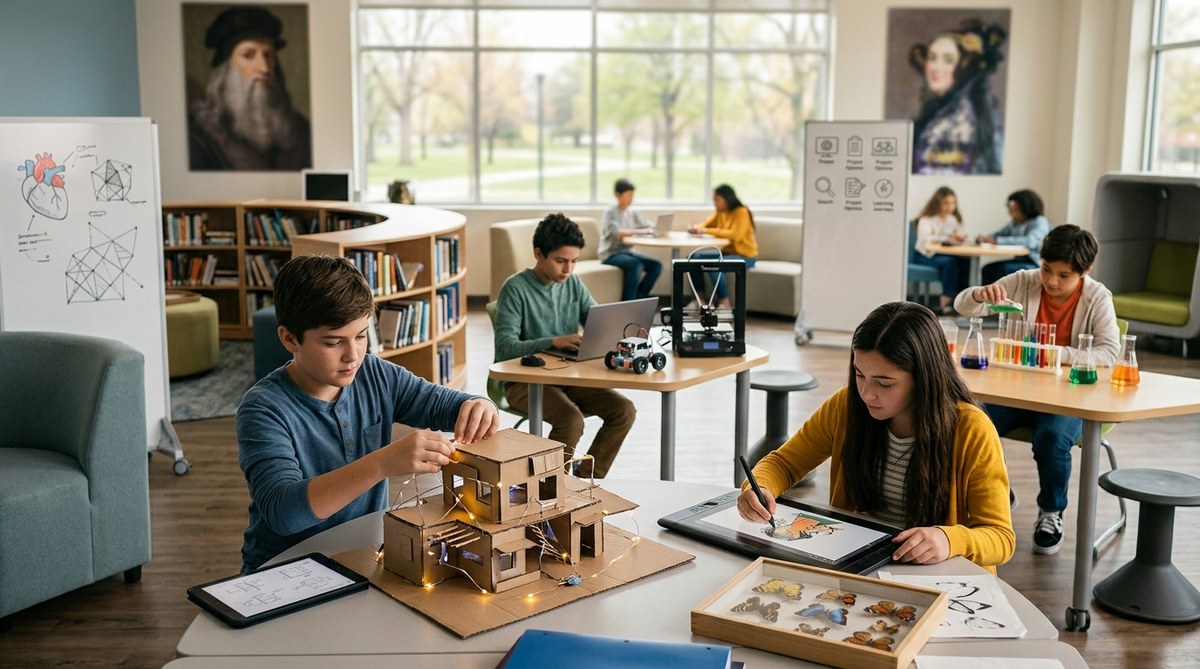
Picture a classroom where students decide what to study, how to study it, and how to show what they know. It sounds messy, and sometimes it is. But the most innovative classrooms in 2026 are built on exactly this principle: student choice in learning. Teachers who trust their students with autonomy report higher motivation, deeper understanding, and stronger critical thinking skills. And research backs it up. When students feel ownership over their education, they stop memorizing facts and start building knowledge. This shift from passive reception to active construction transforms a traditional classroom into a vibrant learning community. Let’s break down why choice matters so much and how you can start implementing it tomorrow.
Student choice in learning fuels intrinsic motivation, builds ownership, and prepares students for a world that demands autonomy. This guide explains the neuroscience behind choice, offers a step-by-step plan to introduce it in your classroom, and warns against common mistakes. You will leave with concrete strategies to make your teaching more flexible and your students more engaged.
The Science Behind Student Choice
Human beings crave autonomy. Psychologists Edward Deci and Richard Ryan developed Self Determination Theory, which names autonomy as one of three basic psychological needs (along with competence and relatedness). When students make choices about their learning, their brains release dopamine, a neurotransmitter linked to pleasure and motivation. That small rush of reward makes them want to keep learning. On the flip side, a classroom where every decision is made for them can trigger learned helplessness. Students stop trying because they feel their actions don’t matter.
Intrinsic Motivation and Ownership
Choice taps into intrinsic motivation. A student who chooses a research topic about dinosaurs because they love paleontology will read more books, ask harder questions, and remember the facts longer than a student forced to write about the Civil War. The same principle applies across subjects. Letting a student pick their math problem set (word problems vs. equations) or their reading format (novel vs. graphic novel) keeps engagement high without lowering rigor. Ownership also builds resilience. When a student chooses a difficult project, they are more likely to push through obstacles because the success feels personal.
Practical Steps to Implement Choice in Your Classroom
You do not need to redesign your entire curriculum overnight. Start small. Here is a sequenced process that has worked in K 12 schools across the country.
-
Identify one unit or lesson where choice fits naturally. Look for topics that have multiple angles or skill levels. A unit on ecosystems, for example, allows students to choose between studying rainforests, deserts, or oceans.
-
Design two to three clear options for students. Keep the number low. Too many choices can overwhelm. Each option must meet the same learning objectives but vary in process, content, or product. For instance, students can write a report, create a poster, or record a short video to demonstrate understanding of the water cycle.
-
Set boundaries and criteria upfront. Explain the grading rubric before students choose. Make sure every option requires the same depth of thinking. If one option seems easier, students will pick it for the wrong reasons.
-
Let students reflect on their choice after the project ends. Ask them what they learned about their own learning style. Did they pick something too hard? Too easy? This reflection builds metacognition, which is a skill that lasts a lifetime.
-
Gradually expand choice across the year. Once students are comfortable, offer choices in assessments, seating, group work, and even daily schedules (if your school allows it). The goal is to make student choice a habit, not a special event.
Common Pitfalls to Avoid
Even well meaning teachers make mistakes when introducing choice. The table below shows common techniques and the corresponding errors that undermine them.
| Technique | Common Mistake |
|---|---|
| Offer a menu of project formats (essay, video, diorama) | Allowing students to choose a format they are already good at without pushing them to grow. Include a requirement to try something new each semester. |
| Let students pick their own reading material | Failing to check reading levels. A student may choose a book that frustrates them, leading to disengagement. Provide guidance and a list of vetted options. |
| Allow students to set their own deadlines | Not following up or holding them accountable. Students need structure. Set a final deadline but let them choose milestones along the way. |
| Give freedom to form their own groups | Letting social dynamics create exclusion. Use random grouping for some projects and choice for others, with clear norms for inclusive behavior. |
Benefits at a Glance
When implemented thoughtfully, student choice in learning produces a range of measurable outcomes:
- Higher engagement and lower absenteeism
- Improved problem solving and critical thinking skills
- Stronger sense of belonging and classroom community
- Greater willingness to take intellectual risks
- Deeper retention of content over time
- Development of executive function skills like planning and self regulation
Teachers also report more job satisfaction. When students are actively engaged, teaching feels less like herding cats and more like facilitating discovery.
Expert Insight
“When students own their learning, they work harder and think deeper. The teacher’s role shifts from dispenser of information to designer of contexts. That shift is the single most powerful change you can make in your classroom.”
— Dr. Elena Vasquez, Professor of Educational Psychology at Stanford University
Dr. Vasquez’s research shows that classrooms with high student choice also have fewer behavioral problems. Students who feel heard are less likely to act out. They see school as a place that respects them, not a place that controls them.
Linking Choice to Interdisciplinary Learning
Choice and interdisciplinary learning go hand in hand. When students choose a problem that interests them, they naturally pull in knowledge from multiple subjects. A student studying climate change might use science to understand carbon cycles, math to analyze data, and art to create a visual campaign. This kind of project based learning thrives when students have autonomy. For more ideas on designing projects that blend subjects, check out our guide on fostering innovation through interdisciplinary approaches in education. It shows how giving students freedom within a structured framework leads to surprising and deep learning.
A New Vision for 2026 Classrooms
Student choice in learning is not about letting students run wild. It is about designing flexible structures that honor their voices while maintaining academic standards. In 2026, the best classrooms look less like rows of desks and more like studios, workshops, or laboratories. Teachers act as guides, curators, and cheerleaders. Students ask questions that matter to them, and they take responsibility for finding answers.
Start small. Pick one lesson next week and offer two real choices. Watch what happens. The first time a student says “I want to learn more about this” instead of “Is this on the test?” you will understand why choice matters. Your classroom can become a place where curiosity leads and compliance follows. That is the kind of education every student deserves.