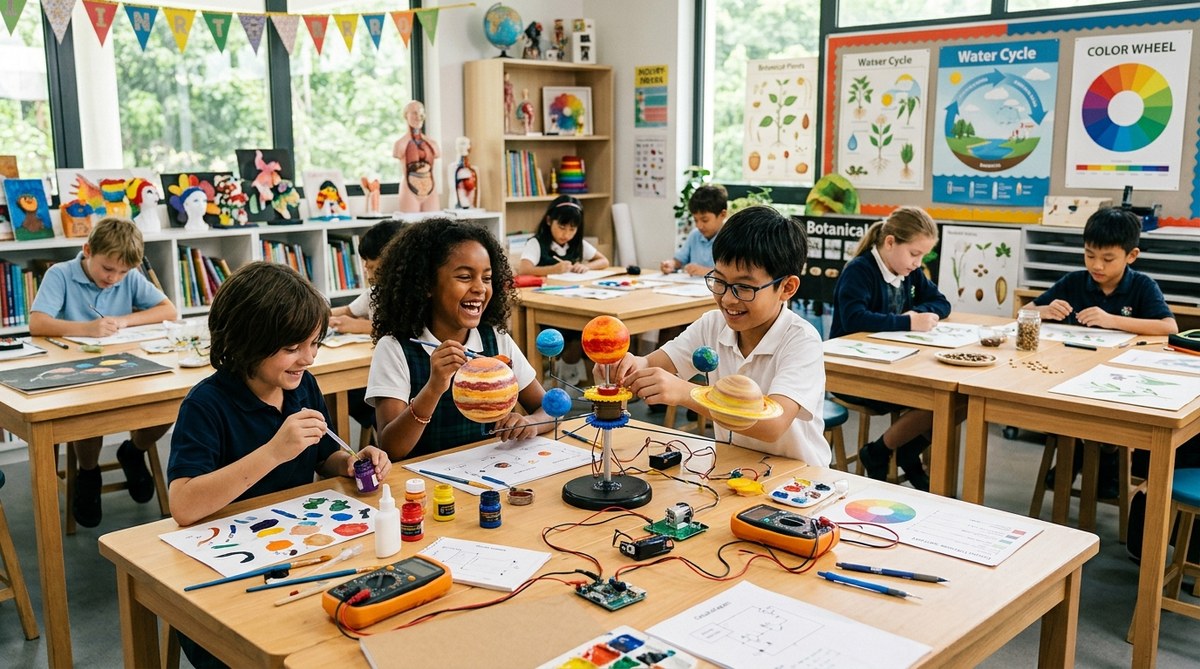
Integrating art and science in the classroom transforms learning from a series of isolated subjects into a vibrant, interconnected experience. It captures students’ attention, stimulates creativity, and deepens understanding of complex concepts. When teachers find ways to combine these disciplines effectively, they open doors for students to think critically and express ideas visually and practically. The possibilities for blending art and science are vast, making lessons more engaging and meaningful.
Combining art and science in your classroom sparks creativity, enhances understanding, and encourages interdisciplinary thinking. Practical strategies include hands-on projects, visual representations, and collaborative activities that make learning both fun and impactful.
Why art and science integration boosts student engagement
Bringing art into science lessons makes abstract or complex ideas tangible. Students can better grasp topics like biology or physics when they can visualize or create representations of concepts. For example, illustrating the structure of a cell through drawing or building models helps deepen understanding. This approach also encourages students to approach problems from multiple angles. It nurtures curiosity and fosters a love of learning by making lessons lively and relatable.
Practical steps for integrating art and science effectively
-
Design hands-on projects that combine artistic expression with scientific principles.
For instance, students can create watercolor sunprints to understand light and shadow or craft models of the solar system. Projects like these turn passive learning into active discovery. -
Use visual aids and diagrams to clarify complex topics.
Encourage students to draw or design infographics that summarize scientific processes. Visual tools help make connections clearer and aid retention. -
Incorporate collaborative art-science activities into your curriculum.
Group projects, such as designing posters about ecosystems or building sculptures to demonstrate physical forces, promote teamwork and interdisciplinary thinking.
Techniques to blend art and science seamlessly
| Technique | What it looks like | Common mistakes to avoid |
|---|---|---|
| Visual representation | Drawing diagrams, charts, infographics | Overloading visuals with too much information |
| Artistic modeling | Creating physical models of scientific concepts | Using models that are inaccurate or uninformative |
| Creative experiments | Designing experiments that include artistic components | Skipping safety protocols or neglecting scientific rigor |
| Storytelling through art | Using comics or storyboards to explain processes | Losing focus on the scientific content |
Engaging students with art-based science activities
- Drawing and labeling: Have students draw parts of a plant or animal and label key features.
- Model making: Build 3D models of molecules, planets, or ecosystems.
- Photography and digital art: Use photography to document experiments or natural phenomena and craft digital collages.
- Storytelling and comics: Create comic strips illustrating scientific concepts or historical discoveries.
“When students express their understanding visually, they often uncover gaps in their knowledge and develop a stronger grasp of the material,” says educational specialist Dr. Emma Carter. Incorporating art into science lessons encourages students to think creatively while mastering content.
Strategies for successful art and science integration
- Start with clear learning objectives that connect art and science goals.
- Provide diverse materials and resources to support creative projects.
- Incorporate reflection sessions where students discuss how their art helped them understand scientific concepts.
- Use technology to enhance visual learning, like digital drawing tools or virtual simulations.
Common pitfalls and how to avoid them
| Mistake | How to prevent it |
|---|---|
| Focusing too much on art at expense of scientific accuracy | Emphasize the importance of understanding scientific facts alongside creativity |
| Neglecting assessment of learning outcomes | Use rubrics that evaluate both artistic effort and scientific comprehension |
| Overcomplicating projects | Keep activities appropriate to students’ age and skill level |
| Ignoring safety during hands-on activities | Always prioritize safety and proper supervision |
Making art and science integration a regular part of your teaching
Incorporate art and science activities into your lesson plans consistently. For example, dedicate a weekly session to creative experiments or visual projects. These activities can be adapted for different grade levels and science topics. Over time, students will develop a natural curiosity for both disciplines and see their connections clearly. Setting up displays of student work can also foster pride and motivation.
Resources and ideas to get started
- Use online platforms like Da Vinci Learning for lesson ideas and project guides.
- Explore books and curriculum materials focused on arts integration.
- Attend workshops or webinars dedicated to interdisciplinary teaching.
- Connect with other educators through social media groups or forums to share ideas and success stories.
Final thoughts on blending art and science
Integrating art and science in the classroom unlocks a world of discovery and creativity. It invites students to see the beauty and relevance of science through artistic expression. By combining practical activities, visual tools, and collaborative projects, teachers can make science lessons more engaging and meaningful. Start small, experiment with different approaches, and watch students blossom as thinkers and creators.
Let creativity lead the way in your science lessons
Encouraging students to express their understanding through art nurtures their curiosity and critical thinking skills. With a little planning and enthusiasm, you can turn your classroom into a dynamic space where science and art inspire each other. Remember, the goal is to make learning accessible, fun, and memorable for every student.