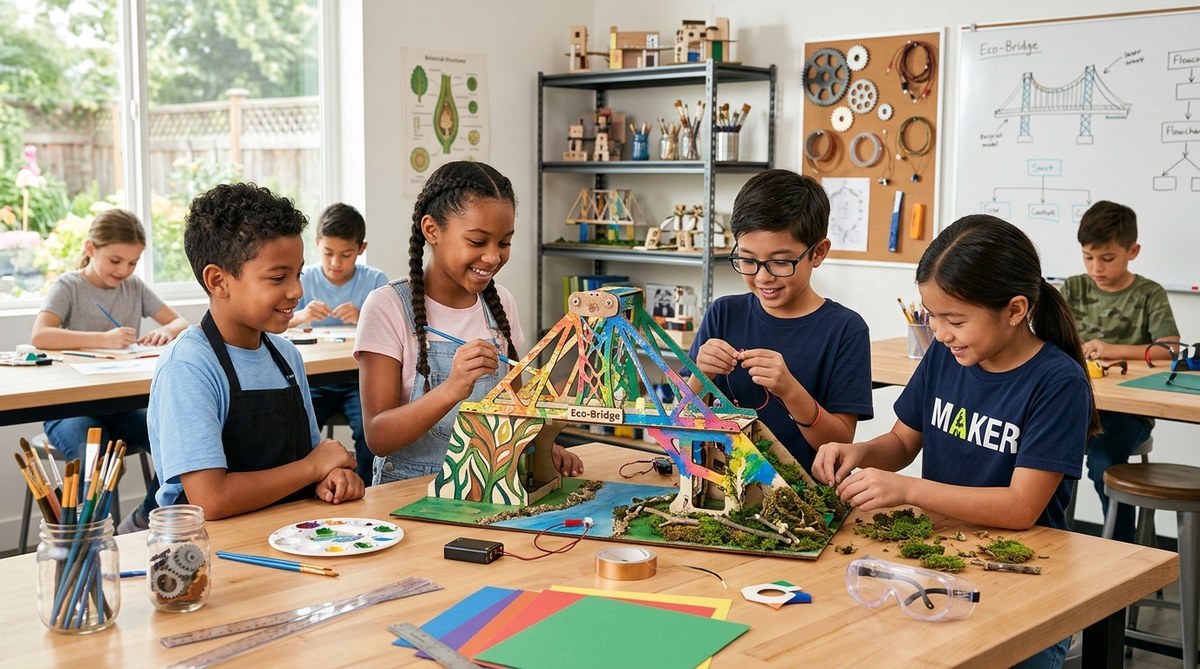
Integrating artistic creativity into STEM classroom activities transforms traditional lessons into vibrant, engaging experiences. It sparks curiosity, nurtures innovation, and helps students see the real-world connections between science, technology, engineering, math, and the arts. This approach encourages students to think outside the box, develop critical thinking skills, and enjoy learning in new, meaningful ways. Whether you’re an experienced educator or just starting to weave arts into your STEM curriculum, blending these disciplines creates a dynamic learning environment that prepares students for future success.
Blending arts with STEM activities encourages creativity, engagement, and critical thinking, making lessons more meaningful and inspiring for students of all ages.
Why Artistic Creativity Enhances STEM Learning
Adding artistic elements to STEM lessons isn’t just about making classes look pretty. It fundamentally deepens understanding. Arts stimulate different parts of the brain, fostering innovative thinking and problem-solving skills. When students are encouraged to draw, visualize, model, or perform as part of STEM activities, they often develop a stronger grasp of complex concepts. For example, creating visual representations of scientific data or designing artistic models of engineering projects helps solidify learning while also nurturing creativity.
Furthermore, integrating arts into STEM supports diverse learning styles. Visual, kinesthetic, and auditory learners all benefit from hands-on artistic activities. This approach also promotes collaboration, as students work together to create projects that blend art and science. Ultimately, it cultivates a classroom culture where curiosity and creativity are celebrated equally.
Practical Steps to Infuse Artistic Creativity into STEM Activities
-
Identify crossing points between arts and STEM concepts. Think about activities that naturally lend themselves to artistic expression. For instance, designing geometric patterns, crafting prototypes, or illustrating scientific processes.
-
Develop project-based lessons that combine art with STEM goals. For example, challenge students to create artistic representations of cell structures or design engineering models decorated with artistic details.
-
Create a supportive environment that encourages experimentation and reflection. Display student artwork and projects prominently. Provide time for students to discuss their creative process and scientific reasoning.
-
Use a variety of creative tools and mediums. Incorporate drawing, painting, sculpture, digital design, music, or performance arts into lessons. For instance, students might compose music to demonstrate mathematical patterns or craft visual models of physics concepts.
-
Foster collaboration between art teachers and STEM educators. Cross-disciplinary teamwork often produces the most innovative projects. Organize joint planning sessions to align objectives and share ideas.
-
Assess both the artistic quality and scientific accuracy. This balanced evaluation encourages students to take pride in their work while maintaining focus on learning goals.
By following these steps, teachers can create engaging lessons that resonate with students’ creative instincts and scientific curiosity.
Techniques to Seamlessly Blend Art and STEM
| Technique | Description | Common Mistakes |
|---|---|---|
| Visual representation of data | Turning complex data into infographics or visual art | Over-simplifying or misrepresenting data |
| Artistic model making | Building physical models with artistic details | Neglecting scientific accuracy in models |
| Creative problem-solving activities | Using art-based challenges to solve STEM problems | Focusing only on aesthetics, ignoring function |
| Storytelling with visuals | Using comics or storyboards to explain concepts | Losing clarity or scientific accuracy in stories |
| Digital art for scientific visualization | Creating animations or digital illustrations | Over-complicating or under-explaining ideas |
Common pitfalls include sacrificing scientific accuracy for aesthetics or vice versa. Aim for a harmonious balance where artistic expression enhances understanding, not detracts from it.
Expert Advice for Effective Integration
“The goal isn’t just to make STEM lessons look more appealing but to deepen understanding and inspire innovation. When students create art rooted in scientific concepts, they develop a personal connection that fosters curiosity and mastery.” – Dr. Lisa Martinez, STEM education specialist
Techniques and Mistakes in Integrating Arts into STEM
| Technique | Mistake to Avoid |
|---|---|
| Using art to visualize scientific data | Making visuals too abstract or inaccurate |
| Incorporating storytelling in lessons | Losing focus on core scientific concepts |
| Encouraging student-led artistic projects | Limiting creativity due to strict guidelines |
| Employing digital tools for art and science | Overloading students with complex software |
Balancing creativity with scientific rigor is key. Encourage students to think critically about their artistic choices and how they relate to scientific principles.
Creative Ideas to Bring Arts Into Your STEM Classroom
-
Design and Build: Have students create artistic models of bridges, buildings, or machines. They can decorate or personalize their designs while considering engineering principles.
-
Data Art: Convert experimental results into colorful graphs or sculptures representing the data. It helps visualize trends and patterns better.
-
Scientific Storytelling: Ask students to produce comic strips or short plays illustrating scientific processes, making abstract ideas more tangible.
-
Music and Math: Use rhythm and melody to teach mathematical concepts like fractions, ratios, or symmetry.
-
Artistic Journals: Encourage students to keep sketchbooks documenting their experiments, observations, and reflections.
Final Tips for Successful Integration
-
Start with small, manageable projects. Don’t overwhelm yourself or students with complex assignments initially.
-
Connect art activities to real-world applications. For example, designing eco-friendly cityscapes or illustrating renewable energy sources.
-
Celebrate artistic efforts publicly to boost confidence and motivation.
-
Provide resources and inspiration from successful examples. You might include links to artist-educator collaborations or STEM art competitions.
-
Remember, the goal is to foster joy and curiosity. Artistic activities should complement and enrich scientific learning, not overshadow it.
Cultivating a Creative STEM Mindset in Your Classroom
Blending arts with STEM isn’t a one-time activity. It’s about shifting your teaching approach to view creativity as an essential part of scientific exploration. By nurturing a culture where students feel safe to experiment, express, and reflect, you open doors to deeper learning and innovation.
Encourage students to see themselves as both scientists and artists. This dual identity unlocks new ways of thinking and solving problems. As you incorporate artistic creativity into STEM activities, you’ll notice increased engagement, improved understanding, and a classroom full of curious, inventive learners.
Final thoughts: Making creativity a natural part of STEM learning
Incorporating arts into your STEM lessons may take some planning, but the rewards are well worth the effort. Students benefit from a richer, more engaging learning experience that develops their critical thinking, creativity, and confidence. Start small, stay flexible, and celebrate every creative breakthrough. Your efforts will inspire students to see science and art as intertwined paths leading to endless possibilities.