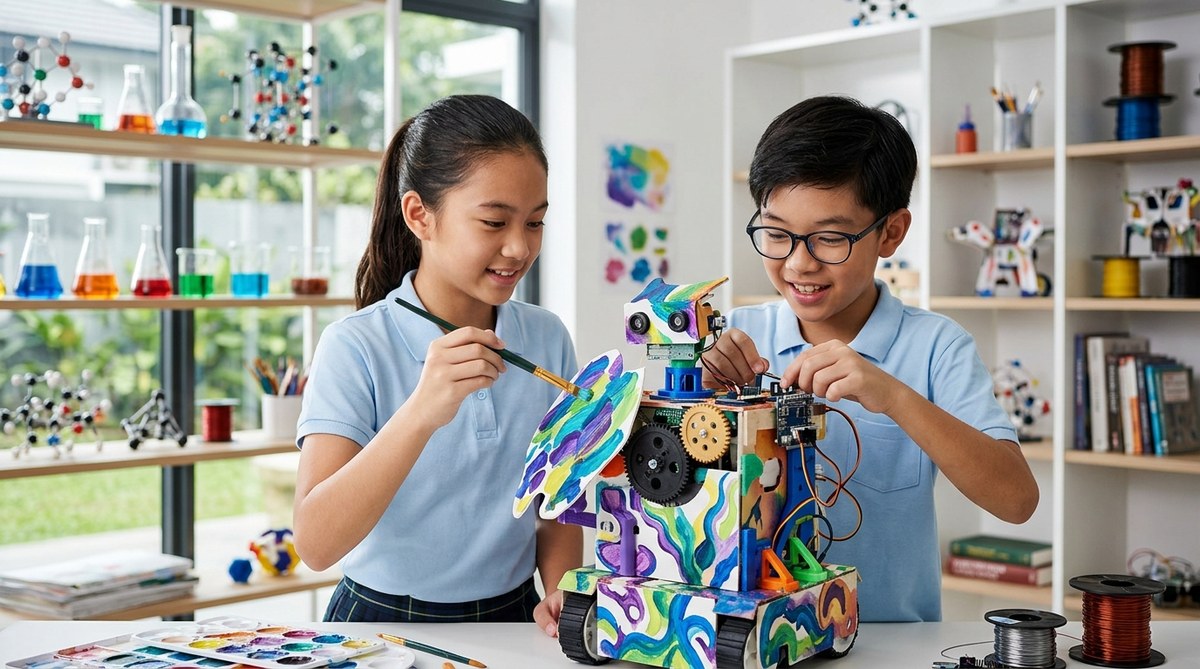
Unlocking the full potential of students requires more than just teaching facts and formulas. Combining artistic creativity with STEM education creates a richer, more engaging learning experience. This approach nurtures curiosity, problem-solving skills, and innovation. It encourages students to see science and technology through a creative lens, leading to breakthroughs in both fields. Educators, parents, and students alike can benefit from understanding how blending art and science fuels discovery and personal growth.
Integrating artistic expression into STEM education sparks creativity, enhances problem-solving, and prepares students for innovative careers. This dynamic approach nurtures well-rounded learners ready to tackle real-world challenges with confidence.
Understanding the Power of Artistic Creativity in STEM Learning
Artful approaches to STEM studies are more than just creative exercises. They serve as powerful tools that deepen understanding and inspire innovation. When students use their artistic skills to visualize scientific concepts, design experiments, or communicate ideas, they develop a more comprehensive grasp of complex topics. This blending of disciplines encourages flexible thinking and helps students see connections they might otherwise overlook.
Research shows that students engaged in artistic activities related to STEM perform better in critical thinking, retain information longer, and develop stronger collaboration skills. Artistic creativity acts as a bridge that makes abstract concepts tangible and relatable, which is vital for learners of all ages.
How Artistic Expression Enhances STEM Learning
Incorporating art into STEM education does not mean replacing traditional methods. Instead, it enriches them by adding layers of engagement and understanding. Here are several ways artistic creativity strengthens STEM:
Visualizing Scientific Ideas
Drawing diagrams, models, or infographics allows students to better comprehend complex systems. For example, a student might create a colorful diagram of the water cycle, making the process more memorable and understandable.
Designing Innovative Solutions
Engineering and design challenges become more engaging when students sketch prototypes or craft physical models. This hands-on approach encourages experimentation and iterative thinking.
Communicating Scientific Discoveries
Art provides a platform for students to express scientific ideas clearly and compellingly. Creating posters, videos, or animations helps communicate findings effectively, which is crucial for sharing research.
Engaging Multiple Learning Styles
Some students learn best through visual or kinesthetic means. Art integration caters to diverse learners, making STEM more accessible and enjoyable for everyone.
Practical Steps to Integrate Artistic Creativity into STEM Education
Implementing this approach can be straightforward. Here are some practical ways to get started:
-
Identify interdisciplinary projects that combine science, technology, engineering, and math with artistic elements. For example, designing a sustainable cityscape using both engineering principles and artistic design.
-
Encourage students to create visual representations of scientific phenomena, such as 3D models or detailed illustrations.
-
Use storytelling techniques to help students craft narratives around scientific concepts, making complex ideas more relatable.
-
Incorporate digital art tools like animation software or design programs to develop multimedia presentations of STEM projects.
-
Foster a classroom environment that values creativity and experimentation as much as accuracy and correctness.
-
Invite artists and scientists to collaborate on projects, offering students a broader perspective on how both fields intersect.
-
Provide access to materials and resources that enable hands-on artistic experimentation related to STEM topics.
How to Avoid Common Pitfalls
| Techniques | Mistakes to Watch For |
|---|---|
| Visual representations | Overcomplicating diagrams, making them hard to interpret |
| Artistic projects | Focusing on aesthetics at the expense of scientific accuracy |
| Communication tasks | Using jargon that confuses rather than clarifies |
| Digital tools | Relying solely on technology without guiding conceptual understanding |
“When students create art based on scientific principles, they internalize concepts more deeply and develop a passion for discovery,” advises Dr. Lisa Martin, an educator specializing in STEAM initiatives.
Examples of Artistic Creativity Boosting STEM Innovation
- Biological art: Artists and scientists working together to visualize DNA structures or cellular processes have led to new insights and public engagement.
- Architectural modeling: Using clay or paper to design eco-friendly buildings combines engineering and artistic skills, fostering innovative solutions.
- Data visualization: Turning complex data sets into compelling visual stories helps scientists communicate findings and inspires new research directions.
- Robotics and design: Creating robot prototypes with artistic flair encourages students to think creatively about engineering challenges.
Techniques to Foster Artistic Creativity in STEM
Here are some strategies for educators and parents:
- Encourage students to sketch their ideas before building or coding.
- Use storytelling and narrative-building to frame scientific projects.
- Integrate art-based assessments, like creating murals or sculptures that represent scientific themes.
- Promote collaborative projects that blend artistic and scientific talents.
- Celebrate creative approaches, emphasizing the process of discovery over perfection.
Common Mistakes to Avoid
| Technique | Mistake to Avoid |
|---|---|
| Skipping planning | Jumping into projects without conceptual groundwork |
| Ignoring individual strengths | Not tailoring activities to students’ unique talents |
| Overemphasizing aesthetics | Sacrificing scientific accuracy for looks |
Unlocking Creativity through Artistic and Scientific Synergy
Fostering an environment where art and science coexist nurtures a mindset that values innovation. When students learn to see problems as opportunities for creative solutions, they develop resilience and adaptability. This mindset is vital in today’s rapidly changing world.
As educators, parents, and students embrace the synergy of artistic expression and scientific inquiry, they cultivate a culture of curiosity and discovery. The result is a generation prepared to push boundaries and generate breakthrough ideas.
Embarking on Your Artistic-Scientific Journey
Starting small can make a big difference. Incorporate art into everyday STEM lessons, encourage creative problem-solving, and celebrate diverse ways of thinking. Remember, the goal is to make learning engaging and meaningful.
For further guidance on fostering creativity and integrating art into STEM lessons, consider visiting educational resources like Da Vinci Learning. They offer practical ideas and inspiring examples to help bring this approach to life in your classroom or home.
Cultivating Creative Thinkers for Tomorrow
Integrating artistic creativity into STEM isn’t just about making learning fun. It’s about preparing students to become innovative thinkers capable of tackling complex problems. By nurturing both imagination and analytical skills, we help develop well-rounded individuals ready to shape the future.
Encourage curiosity, celebrate diversity in thinking, and provide opportunities for creative exploration. Small steps today can lead to significant breakthroughs tomorrow. Whether in a classroom, a workshop, or at home, blending art and science can transform learning into a joyful, powerful experience.
Keep Inspiring Young Minds to Think Beyond Boundaries
Every child has the potential to be a creative scientist or an innovative artist. By weaving artistic expression into STEM education, you open doors to endless possibilities. Support curiosity, foster experimentation, and watch how students thrive when you help them see science through the lens of creativity.
Remember, the journey toward a future filled with discovery and innovation begins with nurturing imagination today.