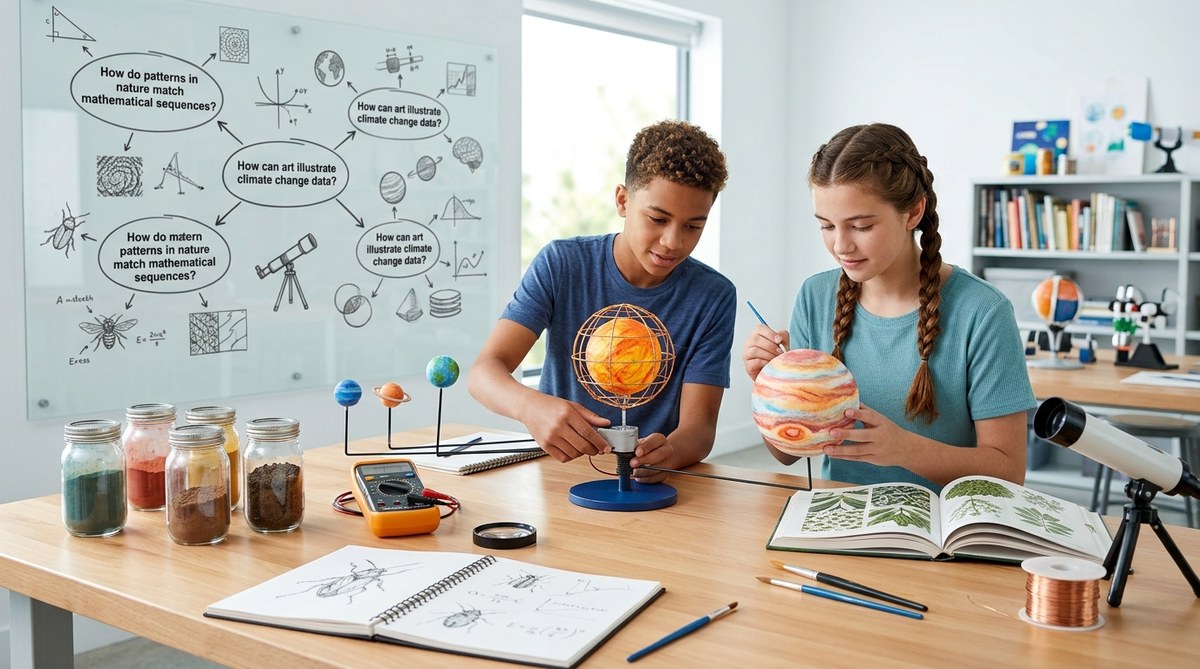
Bringing art and science together in the classroom creates a dynamic environment where curiosity thrives. When students see how these two disciplines intersect, they develop a richer understanding of the world around them. Integrating art and science encourages hands-on exploration, sparks creativity, and nurtures critical thinking. This approach transforms traditional lessons into engaging experiences that inspire learners to ask questions, investigate solutions, and express ideas in diverse ways.
Merging art and science in inquiry-based education opens up new avenues for student engagement. It promotes creativity, enhances understanding of complex concepts, and nurtures a lifelong curiosity about the natural and artistic worlds. By intentionally designing activities that connect these fields, educators can foster a more holistic learning experience that benefits all learners.
Why Integrating Art and Science Matters in Inquiry-Based Learning
Inquiry-based education centers on students asking questions, investigating, and constructing their own understanding. When art and science are integrated into this process, students are empowered to visualize ideas, communicate findings creatively, and approach problems from multiple angles. This integration makes abstract scientific concepts tangible and allows artistic expressions to serve as scientific tools.
For example, a science lesson on ecosystems becomes more meaningful when students create visual representations like dioramas or infographics. Similarly, studying the properties of light can involve experimenting with color mixing and creating art projects that demonstrate scientific principles. These activities deepen comprehension and make learning memorable.
Practical Steps to Merge Art and Science in Your Classroom
- List your learning objectives clearly. Decide which scientific concepts and artistic skills students should develop.
- Design activities that naturally combine the two. Think about projects that require both scientific investigation and artistic expression.
- Incorporate reflection. Have students explain how their artwork relates to scientific principles and vice versa.
Creative processes for integrating art and science
- Use visual art to represent data. Students can create charts, infographics, or models that communicate scientific findings effectively.
- Incorporate hands-on experiments combined with artistic documentation. For instance, students can paint or draw the results of their experiments.
- Develop interdisciplinary projects. For example, designing a habitat model that demonstrates ecological concepts through both scientific accuracy and artistic creativity.
Techniques and common pitfalls
| Technique | Mistake to Avoid |
|---|---|
| Visual data representation | Relying solely on aesthetic appeal rather than clarity |
| Artistic interpretation of scientific concepts | Oversimplifying or misrepresenting scientific facts |
| Hands-on experiments with artistic documentation | Neglecting to connect the artistic work back to the scientific concept |
“The key is to help students see the connection between what they create and what they learn. When art becomes a tool for understanding science, students develop a deeper, more personal connection to the material.” — Dr. Emily Carter, science educator
Engaging Activities That Bridge Art and Science
- Color science with watercolor painting: Students explore how colors mix and relate this to light absorption and reflection.
- Biome models using sculpture: Create three-dimensional representations of ecosystems, illustrating biodiversity and ecological relationships.
- Sunprints and cyanotypes: Use sunlight to develop photographic prints, connecting photography with scientific principles of light and chemical reactions.
- Soundscape compositions: Record and compose sound environments that reflect different habitats or scientific phenomena like weather patterns.
- Data visualization art: Transform raw scientific data into visual art forms such as murals or digital graphics.
Tips for successful integration
- Use real-world contexts relevant to students’ lives.
- Incorporate technology like digital drawing tools or 3D printers.
- Encourage collaborative projects to foster teamwork and diverse perspectives.
- Provide opportunities for students to present their work and explain the science behind it.
Overcoming Challenges in Combining Art and Science
Integrating these disciplines can be challenging if not carefully planned. Common obstacles include limited time, lack of resources, or misconceptions about the purpose of art in science. To address these, consider:
- Starting small with simple activities that require minimal materials.
- Partnering with community artists or science centers for support.
- Framing artistic tasks as essential tools for scientific understanding rather than optional add-ons.
- Reflecting with students on how their artistic creations deepen their scientific comprehension.
Techniques to avoid common mistakes
| Technique | Mistake to Avoid |
|---|---|
| Overloading activities | Overcomplicating projects, leading to confusion |
| Focusing only on aesthetics | Prioritizing appearance over conceptual understanding |
| Ignoring assessment | Not evaluating the learning outcomes effectively |
Final Thoughts on Creating a Cohesive Learning Experience
Integrating art and science in inquiry-based education requires intentional planning and a willingness to experiment. When done well, it transforms the classroom into a vibrant space for discovery and expression. Students learn to see the world through multiple lenses, fostering curiosity and resilience.
By designing activities that connect artistic creativity with scientific inquiry, educators lay the foundation for lifelong learning and innovation. Remember, the goal is to nurture a sense of wonder and encourage students to ask questions about both the artistic and scientific aspects of their world.
Encourage your students to view science as a canvas for creativity and art as a lens for understanding science. This approach not only enriches their learning experience but also prepares them to think critically and imagine solutions beyond traditional boundaries.
Take the next step in your teaching journey by exploring how to unlock creativity through the integration of art and science.