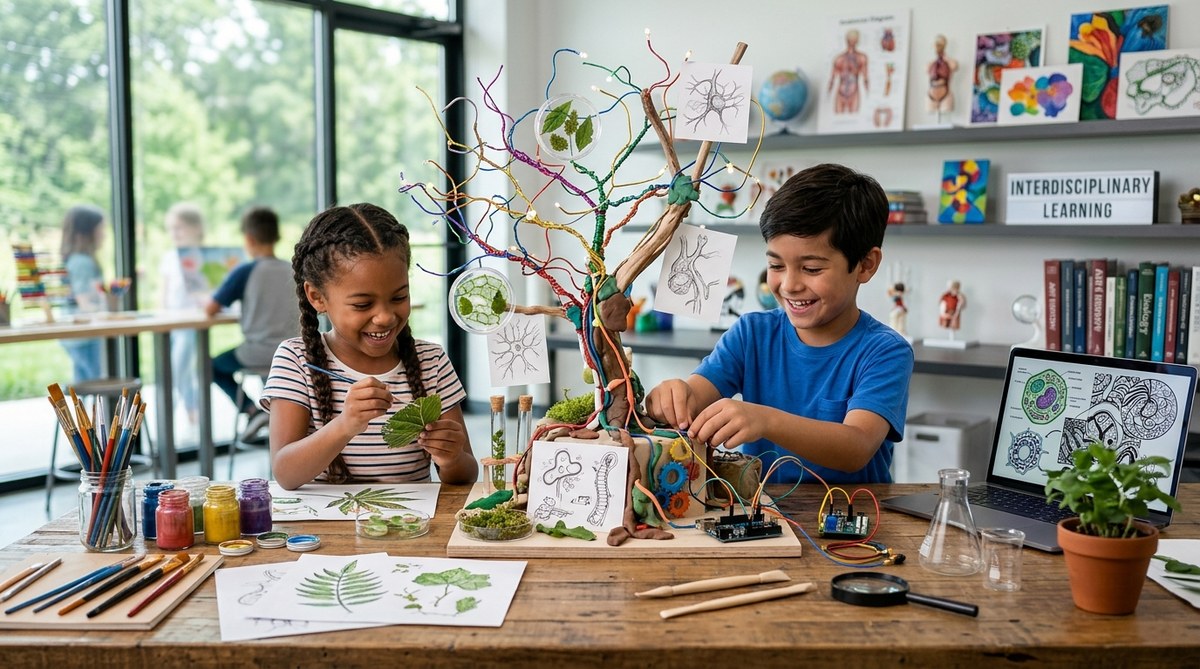
Blending art and science in education offers a vibrant way to spark curiosity, deepen understanding, and make learning more enjoyable. When these two disciplines intersect, students get to see the beauty of scientific concepts through creative expression. This approach not only enhances engagement but also helps develop a wide range of skills including critical thinking, problem-solving, and creativity. Whether you’re a teacher looking to invigorate your lessons or an education enthusiast eager to implement new strategies, understanding how to effectively combine art and science can transform your classroom dynamics.
Integrating art and science in education fosters creativity and critical thinking, making complex concepts more accessible. Practical methods include hands-on projects, visual simulations, and interdisciplinary lessons that inspire curiosity and deeper understanding.
Understanding why blending art and science benefits learning
Combining art and science taps into different ways of thinking and expressing. Science is often seen as structured and logical, while art emphasizes creativity and emotional connection. When these approaches work together, students can better grasp scientific principles by visualizing them through artistic form. For example, creating a watercolor painting of the water cycle helps students internalize the process more effectively than just reading about it. This synergy enhances engagement and retention, making abstract ideas tangible and memorable.
Moreover, integrating art and science encourages learners to approach problems with a multifaceted perspective. It nurtures skills like observation, experimentation, and innovation. As educators, fostering this interdisciplinary mindset prepares students for real-world challenges where solutions often lie at the intersection of different fields.
Practical ways to integrate art and science in your lessons
Here are some effective strategies to help you incorporate art and science seamlessly into your teaching:
-
Design hands-on projects that combine artistic creation with scientific concepts.
For example, students can build models of the solar system using craft supplies or illustrate the phases of the moon with detailed drawings. These activities make abstract ideas concrete and stimulate creativity. -
Use visual tools and diagrams to explain complex scientific phenomena.
Infographics, sketches, and colorful charts can clarify topics like the water cycle or genetic inheritance. Visual representations help visual learners and make information more accessible. -
Encourage students to record scientific observations through art.
Nature journaling, where students sketch plants, animals, or weather patterns, enhances observational skills and fosters a personal connection to scientific study. -
Create interdisciplinary lessons that integrate storytelling, art, and scientific inquiry.
For instance, students can write stories about ecosystems, illustrating their narratives with drawings or comic strips, blending literacy, art, and ecology. -
Incorporate technology such as digital art tools and simulations.
Software programs enable students to create digital models of molecules or simulate physics experiments, merging art with scientific learning in a modern context. -
Organize exhibitions or presentations showcasing student projects that highlight the art-science connection.
This promotes pride, communication skills, and peer learning as students explain their creative scientific concepts.
Techniques that foster innovation and pitfalls to avoid
| Technique | What to do | Common mistakes to steer clear of |
|---|---|---|
| Visual modeling | Use drawings, diagrams, and models to explain concepts | Relying solely on visuals without explanation can cause confusion |
| Artistic expression | Encourage free-form art related to scientific themes | Overly guided projects may stifle creativity or lead to superficial understanding |
| Cross-disciplinary lessons | Combine science experiments with creative storytelling or art projects | Trying to cover too many concepts at once can dilute learning |
| Use of technology | Integrate digital art tools and simulation software | Overcomplicating tasks may frustrate students or reduce focus on core concepts |
“The key is to create a balance where art enhances science learning without overshadowing the scientific principles themselves,” advises education specialist Dr. Lisa Reynolds.
Creating an engaging, integrated curriculum
Designing a curriculum that successfully blends art and science requires thoughtful planning. Start by identifying core scientific concepts aligned with artistic activities. For example, when teaching about ecosystems, incorporate drawing or collage projects that represent different habitats. This not only reinforces content but also stimulates creativity.
Next, consider the diverse learning styles within your classroom. Some students may thrive through visual arts, while others may prefer hands-on experiments. Offering varied activities ensures that every learner can engage meaningfully.
Additionally, fostering collaboration among students encourages peer learning and exposes them to multiple perspectives. Group projects like building a model of the human body with craft materials or creating a comic strip explaining a physics concept can be very effective.
Lastly, integrate reflection and discussion. Have students explain their artistic choices and connect them back to scientific principles. This process deepens understanding and affirms the value of interdisciplinary thinking.
Final steps to bring art and science together effectively
- Plan interdisciplinary activities that align with your curriculum goals.
- Provide resources and materials that facilitate creative expression alongside scientific inquiry.
- Create a classroom environment that celebrates curiosity and experimentation.
- Assess learning through both artistic presentations and scientific understanding.
- Encourage student reflection on how art helped them understand science better.
Making the most of your teaching moments
Blending art and science opens exciting avenues for learning that resonate with students. It transforms traditional lessons into dynamic experiences where creativity fuels curiosity. By integrating these disciplines, you help students see the world through multiple lenses, fostering a lifelong love of discovery.
Start small with simple projects and gradually incorporate more complex interdisciplinary activities. Remember, the goal is to make science accessible and engaging through the universal language of art. Your efforts can inspire a new generation of thinkers who understand that creativity and inquiry go hand in hand.
Connecting art and science for a brighter educational future
Encouraging students to blend art and science nurtures a mindset rooted in innovation. It prepares them to solve complex problems with fresh perspectives. As educators, you play a vital role in shaping this integrated approach, making learning more meaningful and memorable.
In your classroom, try pairing experiments with artistic representations or storytelling. These methods not only reinforce content but also develop skills valuable beyond school. Witnessing students’ enthusiasm as they create and discover is truly rewarding.
Remember, fostering a love for both art and science begins with your imagination and willingness to experiment. Embrace the possibilities and watch your students flourish in an environment where creativity and curiosity thrive together.