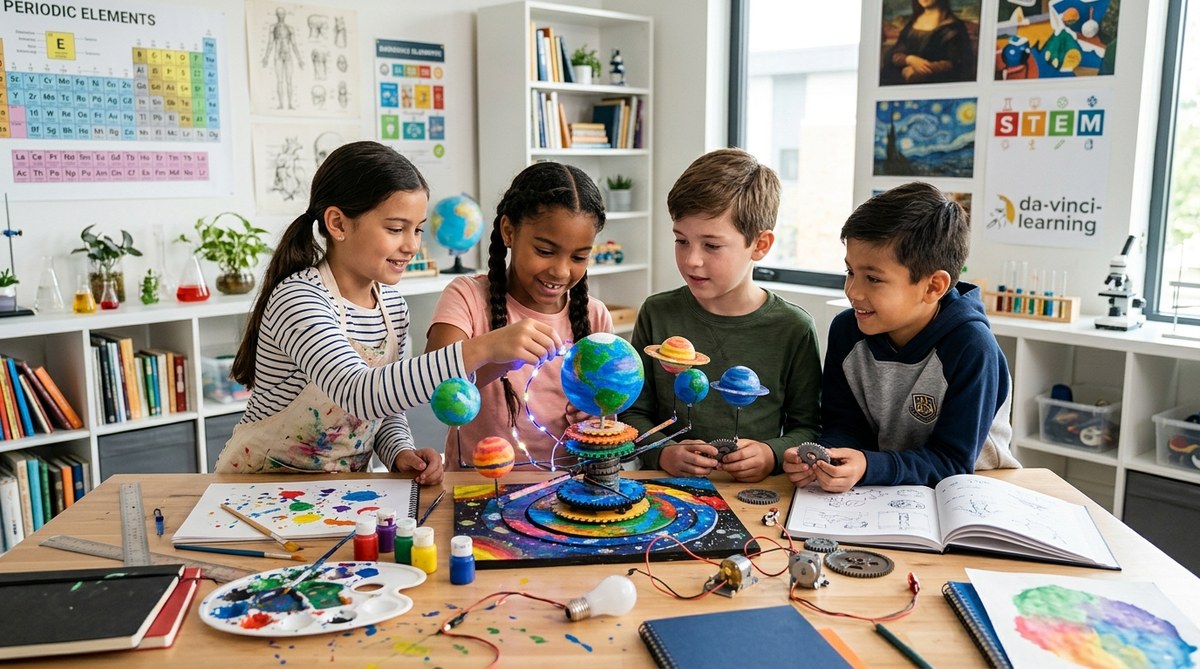
Integrating art and science in the classroom opens a world of possibilities for sparking students’ curiosity and nurturing their creativity. When these two disciplines work together, students develop a deeper understanding of scientific concepts while expressing themselves through artistic mediums. This approach not only makes learning more engaging but also helps students build critical thinking, problem-solving, and collaboration skills. By blending art and science seamlessly, teachers can create a vibrant learning environment that encourages exploration, innovation, and joy.
Integrating art and science in the classroom encourages creativity, deepens understanding of scientific concepts, and makes learning more engaging. Practical activities foster critical thinking and collaboration, helping students connect ideas across disciplines for a rich educational experience.
Why Integrating Art and Science Sparks Student Engagement
Combining art and science taps into different learning styles and intelligences. Visual learners benefit from diagrams, models, and artistic representations of scientific ideas. Kinesthetic learners thrive with hands-on experiments that involve creating art. This blend also makes abstract concepts more tangible. For instance, students can visualize the structure of a cell through drawing or model-making, reinforcing their understanding.
Furthermore, integrating these subjects breaks down traditional classroom silos. It encourages students to see connections between disciplines and appreciate how creativity fuels scientific discovery. This approach cultivates a mindset where questions lead to artistic exploration and vice versa. When students see science as something they can express through art, they become more invested and motivated.
Practical Steps to Combine Art and Science Effectively
Transforming your classroom into a space where art and science thrive together involves intentional planning. Here are concrete steps to help you get started:
-
Identify overlapping concepts
Find scientific topics that lend themselves to artistic interpretation. For example, plant biology can inspire botanical illustrations, or physics principles can be explored through kinetic sculptures. -
Design hands-on, creative projects
Create activities that require students to apply scientific concepts artistically. For instance, they might build models of the solar system, paint cell structures, or craft circuits with conductive art materials. -
Encourage reflection and discussion
After completing projects, have students discuss how their artistic choices relate to scientific principles. This deepens understanding and reinforces the connections.
Techniques and Common Pitfalls
| Technique | What It Achieves | Common Mistakes to Avoid |
|---|---|---|
| Using visual art to illustrate scientific concepts | Enhances understanding and retention | Overloading students with technical details without artistic freedom |
| Incorporating storytelling with art projects | Builds context and emotional connection | Focusing solely on aesthetics instead of scientific accuracy |
| Collaborative projects blending art and science | Promotes teamwork and diverse thinking | Assigning tasks without clear scientific or artistic goals |
“When students create art based on scientific phenomena, they internalize complex ideas more deeply. The act of visualization and creation turns passive learning into active engagement,” suggests education expert Dr. Laura Johnson.
Creative Activities That Bring Science and Art Together
Here are some inspiring activities to try in your classroom:
-
Build a model of the human heart using recycled materials
Students learn about anatomy while practicing sculpture skills. Encourage them to research the structure and function of heart chambers and vessels. -
Draw or paint the phases of the moon over a month to understand lunar cycles.
This combines astronomy with artistic observation and record-keeping. -
Design and conduct experiments with colorful chemical reactions and create visual representations of the processes.
Think of making volcanoes with baking soda and vinegar, then illustrating the chemical reaction. -
Create kinetic art sculptures that demonstrate physics principles like balance, motion, and forces.
This makes physics concepts tangible and visually engaging. -
Explore fractals and mathematical patterns through digital art projects.
Students can generate fractal images using mathematical formulas, linking math with visual creativity.
Fostering a Culture of Creativity and Curiosity
To sustain a successful integration of art and science, cultivate an environment that values exploration over perfection. Encourage students to experiment freely, celebrate their unique approaches, and reflect on what they learn through both artistic and scientific lenses.
- Set up a classroom gallery where students display both scientific diagrams and artwork.
- Invite guest speakers such as artists who work with scientific themes or scientists who incorporate visual methods.
- Organize interdisciplinary projects that span several weeks, allowing students to deepen their understanding and produce meaningful work.
Common Challenges and How to Overcome Them
While merging art and science offers many benefits, teachers may face hurdles such as limited resources, time constraints, or lack of confidence in teaching outside their usual expertise. Here are tips to address these issues:
- Use everyday materials for art projects to minimize costs.
- Integrate art activities into existing science lessons rather than adding extra work.
- Collaborate with colleagues from art or science departments for support and idea sharing.
- Seek out online resources and communities that focus on STEAM (science, technology, engineering, arts, and math) teaching strategies.
| Challenge | Solution | Example |
|---|---|---|
| Limited materials | Use recycled or household items | Bottle caps for molecule models |
| Time constraints | Embed activities within existing lessons | Short drawing exercises after a science lecture |
| Lack of confidence | Partner with colleagues or use tutorials | Co-teaching science and art projects |
Words of Wisdom from Educators Who Blend Art and Science
“The magic happens when students realize they can visualize complex scientific ideas through their own artistic creations,” shares science teacher Maria Lopez. “It transforms their understanding from memorization to genuine comprehension.”
By integrating art and science, teachers create a vibrant, engaging classroom where curiosity blooms. Students learn to see the connections between disciplines, sparking their innate creativity and critical thinking. As they express scientific ideas through art, they develop a richer, more personal understanding of the world around them.
Making Integration a Natural Part of Your Teaching Practice
Start small by choosing one scientific concept and brainstorming artistic ways to explore it. Over time, expand these activities and involve students in designing their own projects. Remember, the goal is to foster a love for learning and discovery, not perfection.
Incorporating art and science unlocks new ways for students to connect with content and see themselves as creators and explorers. Creating a classroom culture that encourages experimentation and celebrates curiosity lays the foundation for lifelong learning and innovation.
By blending art and science thoughtfully, you can transform your teaching into a dynamic, inspiring journey that leaves a lasting impact on your students. Embrace experimentation, listen to your students’ ideas, and watch as their creativity and understanding flourish.